Can You Get Hypnotherapy For Social Anxiety? Real Life Examples and Insights

Social anxiety can make ordinary moments feel loaded. A quick hello at the school gate, ordering coffee, joining a group conversation, or speaking in a meeting can trigger a wave of self-consciousness that feels hard to interrupt. Hypnotherapy For Social Anxiety helps in all situations involving meeting others and interacting naturally.
My clients have presented me with a myriad of situations that they find debilitating and often they struggle to understand exactly why this happens to them
For some, they find it strange that they are most nervous with wider family and friends rather than complete strangers. For others, it is definitely meeting new people that worries them and fires off the nervous system, sometimes in a sickening manner.
What Happens With Social Anxiety?
For some people, it looks like avoidance. For others, it looks like performing confidence while feeling tense inside. The body reacts before the mind has time to reason with it: a racing heart, tight chest, shaky voice, blank thoughts, blushing, sweating, or a desperate urge to leave.
Hypnotherapy For Social Anxiety Calms The Nervous System
There are two parts to the mind: that which you are aware of, the consciousness and that which you are most often not aware of, the unconscious.
Now, you can bring your awareness to your automonous nervous system, for example, you can become AWARE of how quickly your eyes blink. However, sooner or later your attention will wander from that focus and you will continue to blink unconsciously.
So, it is the unconscious that fires off the fight or flight or freeze response just when you don't want it to. Hypnotherapy is often discussed as a way to work with those automatic reactions. For some people, it can be a useful part of learning to feel safer in social situations, especially when anxiety has become a practiced pattern.

What social anxiety feels like from the inside
Social anxiety goes beyond 'being shy'. Shyness may soften once someone warms up. Social anxiety often comes with a strong fear of being judged, embarrassed, rejected, or noticed in the “wrong” way.
A person might know, logically, that no one is studying every detail of their behaviour. Yet the body still responds as if danger is near. That gap between logic and reaction is one reason social anxiety can feel so frustrating.
Common thoughts might include:
“I’ll say something stupid.”
“They’ll notice I’m nervous.”
“I won’t know what to say.”
“Everyone else is more confident than me.”
“If I blush, it will be unbearable.”
The real strain often comes from what happens next. You may avoid the situation, leave early, speak as little as possible, rehearse every sentence, or review the interaction for hours afterward. These coping behaviors make sense in the short term, but they can keep the anxiety cycle alive. Hypnotherapy For Social Anxiety breaks the cycles and rewires the nervous system.
Where hypnotherapy fits into the anxiety cycle
Hypnotherapy involves a focused, relaxed state where the person remains aware and in control. The therapist may guide attention toward calming the body, changing internal imagery, building confidence, or mentally rehearsing situations in a safer way.
The aim is not to “erase” personality or force someone to become loud and outgoing. A better goal is often simpler: to help the nervous system respond with less alarm.
Social anxiety often works like a learned prediction. The mind predicts danger in a social setting, then the body reacts, then the reaction feels like proof that danger was real. Hypnotherapy may help interrupt that loop by working with imagination, expectation, and body response.
In practice, sessions might focus on:
Calming physical symptoms before they escalate
Reducing the fear of being observed
Rehearsing specific situations while feeling grounded
Replacing harsh self-talk with steadier inner language
Building tolerance for normal awkwardness
Strengthening a sense of choice in social moments
Research into hypnosis suggests it can help some people with anxiety-related symptoms, especially when used alongside other approaches. It is not the only route. Cognitive behavioral therapy, exposure work, mindfulness, medication, and lifestyle support may also play a role, depending on the person. However Hypnotherapy For Social Anxiety goes beyond cognitive function, it goes deep into the unconscious where the problem lies.
A real life example involving the school gate
It is not just children who experience physical distress at the school entrance. I saw a client whose client was happy and eager to run into school and the mother became jealous of just how carefree her own child was when she was tortured with insecurites. Remembering a time when she felt so free just made her condition far worse.
Imagine a parent who dreads school drop-off. They love their child and enjoy being part of school life, but the few minutes outside the gate feel intense.
They worry about standing alone. They worry that other parents have closer friendships. They replay short conversations later and wonder if they sounded awkward. Over time, they arrive at the last possible minute and leave quickly.
In hypnotherapy, the work might begin with the body. The parent learns to recognise the first signs of anxiety, such as a tight stomach or shallow breathing, without treating them as a threat. In a relaxed state, they may picture walking to the gate with a slower breath and a softer focus.
Next, the therapist might guide a mental rehearsal. The parent imagines saying a simple hello, standing comfortably for one minute, and allowing silence without panic. The imagined scene is not made unrealistically perfect. It includes normal details: someone looking at their phone, a child interrupting, a brief pause in conversation.
That matters because confidence grows better from believable practice than fantasy. The aim is not to become the most sociable person at the gate. The aim is to stop feeling trapped by fear.
A small real-world step might follow. The parent decides to arrive two minutes earlier once that week. They do not need to start a long conversation. They only practice staying present.
Over time, the school gate changes from a danger zone into a manageable routine.

A real life example involving speaking in a group
Group conversations can be difficult because they move quickly. There is less time to prepare. Someone with social anxiety may become so focused on finding the “right” thing to say that they miss the flow of the conversation. Hypnotherapy For Social Anxiety for this person may involve a trance state of pre paving such occasions and allowing it all to slow down. Fear makes everything speed up you see, relaxing creates space to think.
Picture a person invited to a birthday dinner. They want to go, but they worry about being quiet, getting stuck next to someone they do not know, or having all eyes turn toward them when they speak.
Before the event, they might imagine every possible failure. In the moment, their body gets tense. They speak less. Later, they criticize themselves for not being more relaxed.
Hypnotherapy For Social Anxietymay help by changing the internal rehearsal. Instead of repeatedly imagining embarrassment, the person practices picturing a more balanced outcome. They see themselves listening, smiling, asking one simple question, and contributing one comment.
A therapist might also help the person work on attention training. Social anxiety pulls attention inward: “How do I look? Is my face red? Did my voice shake?” A useful shift is learning to place more attention outward: the color of the room, the words the other person is saying, the taste of the food, the feeling of feet on the floor.
The birthday dinner may still bring nerves. That is normal. Progress might look like staying for an hour, asking two questions, and leaving without replaying the night until 2 a.m.
That may sound modest, but for social anxiety, modest wins are often the foundation of lasting change.
Why the body needs to be part of the conversation
Many people try to think their way out of social anxiety. They tell themselves, “No one cares,” or “Just be normal.” Sometimes that helps. Often, it does not.
The reason is simple. Anxiety is not only a thought problem. It is also a body state.
When the nervous system senses threat, it prepares for protection. Heart rate changes. Muscles tighten. Breathing shifts. The mind scans for danger. In a social setting, the “danger” may be embarrassment rather than physical harm, but the body can still react strongly.
Hypnotherapy can be useful because it gives the body a different experience to practice. In a calm, focused state, the person can imagine a social situation while pairing it with steadier breathing, looser muscles, and a sense of safety.
That does not mean imagination alone solves everything. Real-world practice still matters. But mental rehearsal can make the first real steps less overwhelming.
This is similar to how athletes rehearse movement or musicians mentally practice a performance. The mind and body learn through repeated experience, even when part of that experience is imagined.

What hypnotherapy can help with
Hypnotherapy may support social anxiety in several practical ways. The strongest benefit is often making feared situations feel more approachable.
It may help with:
Reducing anticipatory anxiety
The dread before an event can be worse than the event itself. Hypnotherapy can help people rehearse the lead-up in a calmer way, such as getting ready, traveling there, walking in, and greeting someone.
Softening physical reactions
Some people fear the symptoms of anxiety more than the social situation. They worry about blushing, sweating, shaking, or stumbling over words. Learning to respond calmly to those symptoms can reduce the second wave of panic.
Changing the inner critic
Social anxiety often includes a harsh internal voice. Hypnotherapy may encourage kinder, more realistic self-talk, especially after conversations.
Practicing new behaviours
A person can mentally rehearse making eye contact, asking a question, answering briefly, or staying in a room instead of leaving. This can make real practice feel less unfamiliar.
Building a steadier self-image
Many people with social anxiety carry an image of themselves as awkward, exposed, or inferior. Hypnotherapy may help update that image into something more balanced and grounded.
What hypnotherapy is unlikely to do
A balanced discussion needs clear limits. Hypnotherapy is not mind control. It does not remove every uncomfortable feeling. It does not mean someone will suddenly love parties, networking, dating, or public speaking.
It also cannot replace appropriate care when social anxiety is severe or part of a wider mental health condition. If someone has panic attacks, trauma history, depression, substance use concerns, or intense avoidance that affects daily functioning, they may need a wider treatment plan. Then we would progress from Hypnotherapy For Social Anxiety to the solution focussed approach for whatever is presented. Many do not know that their surface discomforts could be indicative of something far greater. Rest assured we can help with all dimensions of fear and bring a great deal of comfort and resolve to help you.
A good practitioner will be honest about this. Ethical hypnotherapy works with the person’s goals, consent, and pace. It never pressures someone to relive painful experiences or promise instant transformation. We are guided by you. It is like we are a temporary advocate between you and your unconscious mind. You tell us how you wish to behave and feel and we generate that state for you to enjoy right now and into your future.
Social anxiety also improves best when practice happens outside the session. A person may feel calm during hypnosis, but life changes when they use that calm in real situations.
A real life example involving dating
Dating can bring social anxiety into sharp focus because the fear of judgment feels personal. A person may avoid apps, cancel plans, or agree to meet but spend the whole date monitoring themselves.
My recent client was someone who has not dated in years. They finally agreed to meet up with someone after hundreds of texting interactions and communications. They felt already very close to this man and he had given every reassurance possible.
She agreed to meet him. Then she came to see me as her whole body visibly trembled thinking of meeting him that evening.
She was actually sweating and shaking and this was just at the thought of meeting him. It was such a shame and so easily remedied. Her nervous system was just protecting her from being scared. Yet, when she realised this was actually excitement, the response immediately softened.
Hypnotherapy For Social Anxiety might start with separating the date from the threat response. The person practices imagining a first meeting as a conversation, not a test. They rehearse arriving, sitting down, noticing the room, and asking a simple question.
The therapist may also help them prepare for ordinary uncertainty. The date might be pleasant. It might be awkward. There may be no spark. None of those outcomes has to mean failure.
That is a powerful shift. Social anxiety often treats any discomfort as proof of personal inadequacy. A healthier view allows discomfort to be part of being human.
A real-world step might be sending one message, agreeing to a short coffee, or staying for 30 minutes rather than escaping early. The goal is not to force romance. The goal is to rebuild trust in the ability to cope.
A real life example involving work conversations
Work can be tricky because social anxiety may hide behind competence. A person might do their tasks well but avoid speaking up, asking questions, joining casual conversations, or sharing ideas.
They may fear sounding foolish. They may overprepare for simple updates. They may stay quiet even when they have something useful to say.
My client had worked hard at their job for many, many years. They were well respected and very comfortable. Then one day they were asked to give a presentation at a meeting and completely failed in the task. The bosses could not understand it and gave every support, though it was clear this was going to become a necessary part of their job and now they couldn't sleep for being terrorised by thoughts of crumbling again. So they came to me.
In Hypnotherapy For Social Anxiety, the person might rehearse a specific moment, such as giving a brief update in a small team conversation. The focus would not be on becoming flawless. It would be on speaking while grounded, safe and comfortable. We make the extraordinary ordinary for the client. It becomes 'no big deal', just an ordinary occurence in their working day. This becomes a chance to showcase what they know and invite interest and questions to talk knowledgeably about.
They might practice:
Feeling both feet on the floor
Taking one breath before starting
Saying one clear sentence
Letting others respond without overexplaining
Moving on afterward without replaying every word
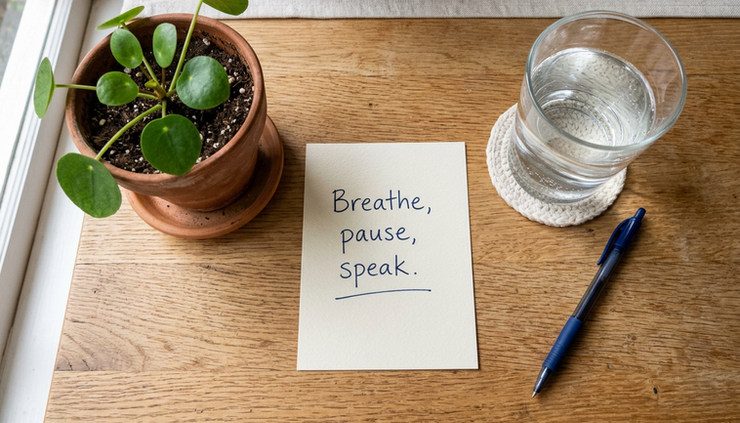
Oh yes, never underestimate the tip of taking a sip of water to give yourself time to think! That is such a good piece of advice.
This kind of work can help because it targets the exact moment anxiety takes over. It brings the person back to something manageable.
Instead of “I must impress everyone,” the practice becomes “I can say one useful thing and stay present.”
How to tell if hypnotherapy is a good fit
Hypnotherapy may be worth exploring when a person feels stuck in automatic reactions, especially if they can describe the situations that trigger anxiety. It often helps to have a clear focus, such as eating in public, making phone calls, attending gatherings, dating, or speaking in groups.
A good fit often includes:
Willingness to practice between sessions
Interest in body-based calming techniques
Openness to guided imagery or focused relaxation
Clear goals that can be broken into small steps
Realistic expectations about progress
What progress really looks like
Progress with social anxiety is often quieter than people expect. It may not look like becoming the life of the party. It may look like answering the phone without rehearsing for 20 minutes. It may look like staying at a gathering long enough to have one genuine conversation. It may look like blushing and not fleeing.
That last point matters. The goal is not always to stop every symptom. Sometimes the breakthrough is realising symptoms can happen without disaster.
A person can feel nervous and still speak. They can have a shaky voice and still be understood. They can pause in conversation and still belong. They can leave an event without turning the whole evening into evidence against themselves.
Hypnotherapy can help some people build that felt sense of safety. It can give the mind and body a new pattern to practice. Paired with gentle real-world steps, it may reduce avoidance and make social life feel less threatening.
The best question may not be, “Can hypnotherapy remove social anxiety completely?” A more useful question is, “Can it help me respond differently when anxiety shows up?”
True change takes place when one can feel entirely differently in the same situation.
For many people, this where change begins. Let's get better, together.
If you want to learn more about hypnotherapy for anxiety, take the first step today. Your calmer, brighter future awaits.
FREE AUDIOS FOR YOU
Book your free consultation session with Jennie Hypnowoman

Comments